Reading Time: 14 minutesEkonomisti vole zakone. Stvarnost voli izuzetke. Okunov zakon sedi nezgodno između: dovoljno je slavan da zasluži veliko početno slovo, dovoljno je skroman da dolazi sa prećutnim sleganjem ramenima. On povezuje tržište rada sa poslovnim ciklusom tako što, u suštini, kaže da kada proizvodnja razočara, nezaposlenost obično raste; kada proizvodnja ubrza,…

Okun’s Law: The rule that works, until it doesn’t
Reading Time: 14 minutesEconomists love laws. Reality loves exceptions. Okun’s Law sits awkwardly in between: famous enough to earn a capital letter, modest enough to come with an implied shrug. It links the labour market to the business cycle by stating, in essence, that when output disappoints, unemployment tends to rise; when output…

Construction in Serbia, 2000Q1–2024Q4: Part 2 — Dependence, forecasting, and synchronization with GDP
Reading Time: 9 minutes1. Part 2 introduction Part 1 established the structural anatomy of the series: a strong trend plus durable seasonality. Part 2 asks three applied questions that matter for analysts and policymakers. First, how persistent is construction activity once you look beyond the seasonal pattern? Second, can a standard ARIMA model…
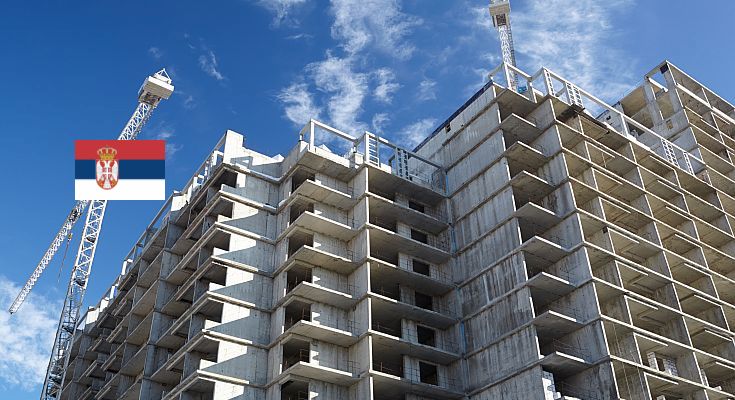
Construction in Serbia, 2000Q1–2024Q4: The trend, the seasons, and what the cycle is telling us
Reading Time: 7 minutesThis post analyses in two parts Serbia’s quarterly Construction index (base 2021 = 100) over 2000Q1–2024Q4. The tone is deliberately “macro-for-educated-readers”, but the logic is firmly time-series: separate the long-run trajectory from regular seasonal swings, then ask what remains, and whether that “remainder” lines up with the broader GDP cycle….

The digital mirage: Why “more tech” still isn’t showing up as productivity for Croatian manufacturers
Reading Time: 5 minutesDigitalisation is routinely marketed as the straightest line from the shop floor to higher productivity. Install the software, connect the machines, automate the paperwork, and competitiveness should follow. Yet inside real manufacturing firms, especially mid-sized ones operating under tight labour markets and uncertain demand, digital transformation rarely behaves like a…

ESG isn’t your credit crystal ball (yet): What Croatia’s data really says about sustainability and risk
Reading Time: 5 minutesESG, Environmental, Social, and Governance, has become finance’s favorite shorthand for “future-proofing.” In theory, firms that manage environmental exposure, social relations, and governance quality should be safer borrowers: fewer regulatory shocks, fewer reputational blow-ups, cleaner compliance, better management discipline. That intuition has helped ESG migrate from corporate PR to investor…

Retail trade and catering in Serbia: What the seasonal anatomy reveals
Reading Time: 7 minutesData context and figures. This note interprets a set of monthly charts for Serbia’s retail trade (constant prices) and catering (constant prices). The figures include original vs seasonally adjusted series (in levels and logs), STL decompositions, a scatterplot matrix, first- and seasonally-differenced views, “trend vs seasonal contribution” comparisons, and a…

Unit labour costs in Serbian industry: What the monthly data say (2008–2025)
Reading Time: 7 minutes1. Introduction Unit labour cost (ULC) is a compact measure of cost-pressures from wages relative to productivity. When ULC rises, each unit of output requires more labour cost; when it falls, firms can produce the same output with cheaper effective labour. In an export-exposed sector such as Serbian industry, persistent…

Average wages in Serbia, 2005–2025: Trend, seasonality, and the post-inflation normalisation
Reading Time: 9 minutes1. Introduction Average wages are one of the cleanest windows into an economy’s living-standard dynamics. They condense firm-level conditions, labour-market tightness, bargaining institutions, and macro shocks into a single sequence that households feel directly. In Serbia, wage statistics are published monthly and, viewed over two decades, carry the imprint of…

Real GDP in Slovenia, 2000Q1–2025Q2: Trend, Seasonality and Shocks
Reading Time: 13 minutes1. Introduction Real gross domestic product (real GDP) measures the total value of goods and services produced in an economy, corrected for changes in prices. In the case of Slovenia, we are looking at a series of “chain-linked volumes, index 2020 = 100,” which allows comparisons over time without distortions…